Beyond the Scoreline: Measuring Progress in Youth Football
Explore practical metrics beyond winning to measure young players' growth, focusing on development goals, self-assessment, and fostering a culture of learning.
Introduction
In the competitive world of youth football, the emphasis on winning can often overshadow the more significant, nuanced aspects of player development. While the thrill of victory is undeniable, the true measure of progress, especially among U9–U14 players, lies beyond the scoreline. This article delves into why shifting focus from results to performance can lead to more substantial, long-term success for young athletes.
Understanding the Winning Mentality
It’s completely natural for young players to equate success with winning. After all, the scoreline is the most visible result, and celebrations usually follow a win, not a hard-fought loss. For players aged 9–14, winning feels like validation. It’s social, emotional, and often tied to how they perceive their place in the team.
But as coaches, we know that long-term development is rarely reflected in a single game’s result. A narrow loss after controlling possession or improving teamwork can show more progress than an easy win. Helping players see beyond the scoreline is key to building confident, resilient footballers.
The Importance of Performance-Based Development Goals
Rather than focusing on outcomes, shift your team’s goals to how they play. Performance-based development goals can be simple, clear, and empowering:
-
Can we complete more passes than last week?
-
Can we keep our shape better when out of possession?
-
Can every player take a shot or make a tackle?
When players focus on how they’re contributing, they begin to value effort, technique, and decision-making—which are much more controllable than the final score.
Simple Metrics to Track
📊 You don’t need a scout or a spreadsheet to measure growth. Here are simple, game-relevant stats to track that can spark meaningful conversations with your team:
-
Completed Passes – Are players looking up and choosing the right option?
-
Shots on Target – Encouraging positive risk-taking and attacking play.
-
Number of Tackles or Interceptions – Effort and defensive awareness.
-
Time Spent in the Opposition Half – Shows attacking intent and territorial control.
-
Goals Conceded (Compared to Previous Games) – A useful defensive benchmark.
-
Goalkeeper Saves – Confidence and positioning under pressure.
Use these as talking points, not scorecards. The aim is to notice trends, encourage reflection, and highlight improvements over time.
Encouraging Self-Assessment and Reflection
🧠 One of the most effective ways to build awareness and accountability is to involve players in their own assessment. After games or training:
-
Ask players to rate themselves out of 10 on things like teamwork, decision-making, and effort.
-
Encourage them to share one thing they did well and one thing they want to improve.
-
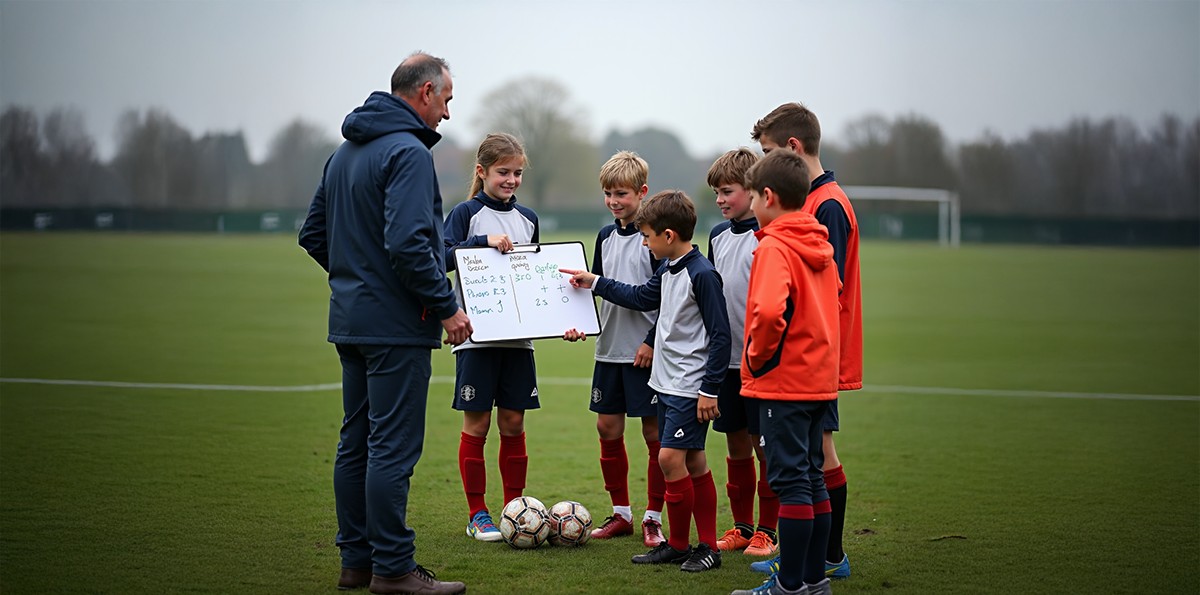
Use whiteboards or stickers to track team-wide progress in key areas.
This keeps reflection positive and player-led—crucial for maintaining motivation.
Creative Ways to Celebrate Progress
Instead of “Man of the Match,” consider awarding:
-
🧠 Thinker of the Game – Smartest decision under pressure
-
🔄 Most Improved – Based on a specific skill or habit
-
🤝 Top Teammate – Leadership, encouragement, or unselfish play
-
🧱 Defensive Wall – Outstanding contribution in defence
Celebrate the little wins in training and games. A printed stat sheet, a highlight reel of great moments, or even a simple “Well Done Wall” can reinforce that growth is worth cheering just as much as goals.
Building a Team Culture Around Growth and Learning
Creating a team culture that prioritizes growth and learning over winning alone can transform the team's approach to training and competition. Emphasizing effort, persistence, and resilience as valued traits encourages players to embrace challenges and view setbacks as opportunities for growth.
Conclusion
Shifting the focus from winning to performance and development offers a more enriching and rewarding experience for young players. By adopting a growth-oriented approach, coaches can foster an environment where players are motivated to improve, resilient in the face of setbacks, and, most importantly, passionate about the game. The real victory lies in witnessing the transformation of young athletes into skilled, confident, and team-oriented players.