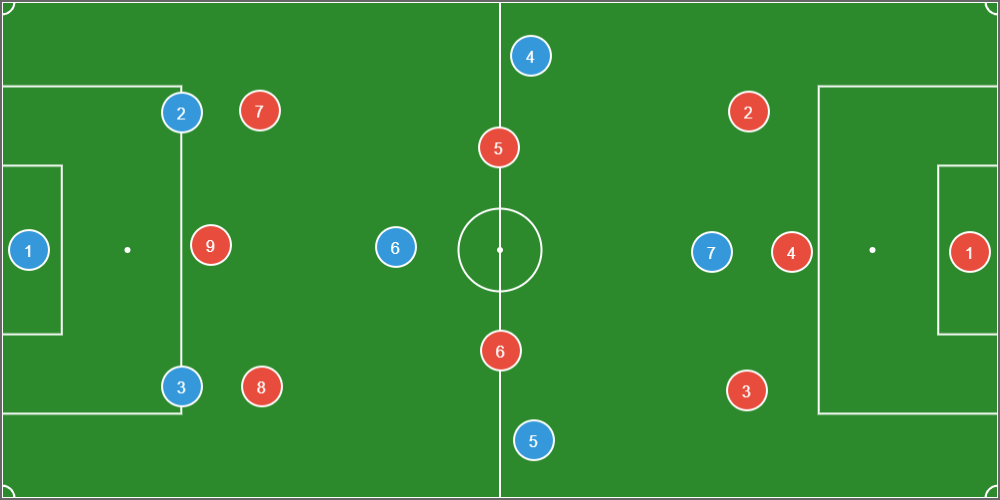
Broadening Horizons: Transitioning from 7v7 to 9v9
After mastering 7v7, the natural progression is to increase the number of players and the complexity of play. Transitioning from 7v7 to 9v9 expands the tactical landscape, allowing teams to adopt more sophisticated formations and strategies. This article explains how the 9v9 format challenges teams to think more collectively and prepares them for the realism of full-sided football.
Introduction
After mastering 7v7, the natural progression is to increase the number of players and the complexity of play. Transitioning from 7v7 to 9v9 expands the tactical landscape, allowing teams to adopt more sophisticated formations and strategies. This article explains how the 9v9 format challenges teams to think more collectively and prepares them for the realism of full-sided football.
Understanding the Transition
The jump to 9v9 introduces additional layers of strategy. With more players on the pitch, the game shifts from relying on individual brilliance to embracing a collective approach. Players must adapt quickly, learning to maintain positional discipline and execute coordinated movements. This stage is pivotal in enhancing spatial awareness and refining decision-making skills.
Deep Dive into Common Formations
In 9v9, coaches often use formations such as:
- The 3-3-2 Formation:
Featuring three defenders, three midfielders, and two forwards, this balanced setup provides a solid defensive base while enabling swift attacking transitions. - The 4-2-2 Formation:
With four defenders and two central midfielders, this formation emphasizes defensive organization while still allowing for offensive support from two forwards. - The 3-2-3 Formation:
Designed for an aggressive attacking approach, this formation deploys three forwards to pressure the opposition, with three defenders and two midfielders maintaining balance and quick transitions.
Tactical Benefits and Team Dynamics
Moving to 9v9 brings several advantages: – Enhanced Tactical Complexity: Players learn to navigate more intricate positional responsibilities. – Improved Decision-Making: The increased number of players means decisions are more complex, requiring quick and thoughtful responses. – Greater Emphasis on Coordination: More roles necessitate improved communication and collaboration among teammates.
Coaching Strategies and Drills
To support this transition, coaches can: – Implement Positional Drills: Exercises that focus on maintaining shape and executing quick transitions between defense and attack. – Use Scenario-Based Training: Simulate match conditions where players must adjust positions and tactics in real time. – Hold Feedback Sessions: Regularly review match footage to help players understand the benefits and challenges of each formation.
Player Perspectives and On-Field Application
Players transitioning to 9v9 often note a marked improvement in spatial awareness and an enhanced ability to anticipate teammates’ movements. This format bridges the gap between small-sided play and full-team football, making the transition smoother and more intuitive.
Conclusion
The move from 7v7 to 9v9 is a critical step in developing tactical acumen. By adopting formations like the 3-3-2, 4-2-2, and 3-2-3, teams can achieve a balanced approach that marries defensive solidity with attacking flair—preparing them for the challenges of full-sided football.
Coming Soon: Moving from 9v9 to 11v11 formations!