Completing the Puzzle: Transitioning from 9v9 to 11v11
The final stage in youth football development is the transition from 9v9 to the full 11v11 game. This leap mirrors professional football, demanding technical prowess, tactical intelligence, and seamless team coordination. This article explores the complexities of 11v11 football, including popular formations and strategies for integrating individual skills into a cohesive team unit.
Introduction
The final stage in youth football development is the transition from 9v9 to the full 11v11 game. This leap mirrors professional football, demanding technical prowess, tactical intelligence, and seamless team coordination. This article explores the complexities of 11v11 football, including popular formations and strategies for integrating individual skills into a cohesive team unit.
Understanding the Transition
Moving to an 11v11 format involves a significant increase in players and positional specialization. In this full-sided game, individual talents must merge with collective strategy. Enhanced communication, role clarity, and advanced tactical understanding are critical as players learn to balance personal skill with team requirements.
Deep Dive into Common Formations
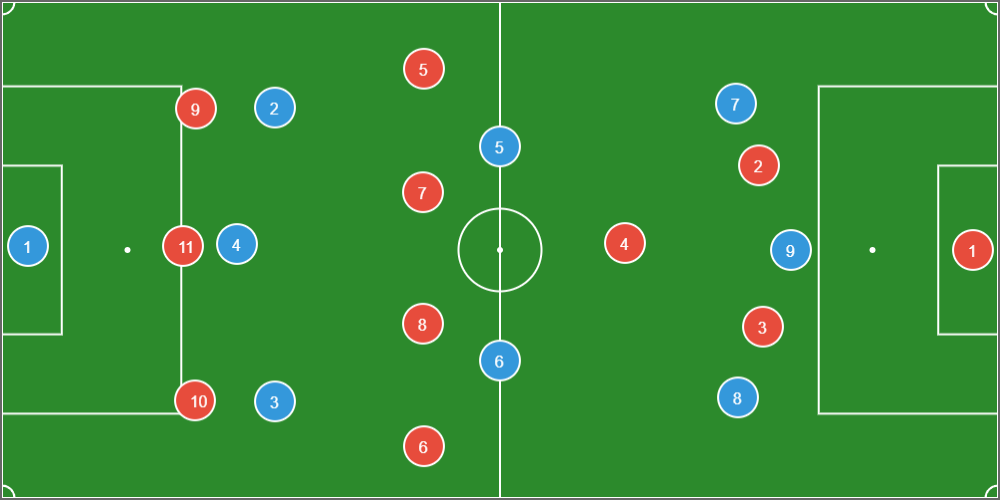
Common formations in 11v11 include:
- The 4-4-2 Formation:
A classic structure with four defenders, four midfielders, and two forwards. This formation offers balanced defensive solidity and flexible attacking options. - The 4-3-3 Formation:
Favored by teams with an aggressive style, this setup uses four defenders, three midfielders, and three forwards. It encourages width, quick transitions, and a high pressing game. - The 3-5-2 Formation:
A versatile formation featuring three central defenders, five midfielders, and two forwards. This approach emphasizes midfield dominance and fluidity between defense and attack.
Tactical Benefits and Team Integration
Transitioning to 11v11 is about integrating skills into a unified system: – Advanced Role Specialization: Players refine their specific roles, whether as wingers, central midfielders, or specialized defenders. – Strategic Depth: The full-sided game allows for complex tactical maneuvers like pressing, counter-attacks, and zonal marking. – Enhanced Communication: Effective dialogue becomes critical as teams coordinate movements and adjust tactics in real time.
Coaching Strategies and Implementation
To manage this transition successfully, coaches should: – Develop Integrated Tactical Drills: Simulate full-match conditions to practice coordination between different lines. – Encourage Role Rotation: Allow players to experience various positions to build versatility and a comprehensive tactical understanding. – Use Professional Analysis: Study top-level matches to help players visualize and grasp advanced tactics.
Player Perspectives and On-Field Application
Players who make the jump to 11v11 often describe it as a synthesis of everything learned so far. They must combine technical skills with a refined tactical mindset. The full-sided game challenges players to be both creative and disciplined, resulting in a richer, more complete understanding of football.
Conclusion
The progression to 11v11 represents the pinnacle of youth football development. By adopting formations like the 4-4-2, 4-3-3, and 3-5-2, teams learn to operate as a unified entity where individual talents support a comprehensive tactical strategy. With focused training, clear communication, and continuous improvement, this transition lays the groundwork for success at the highest levels of the game.