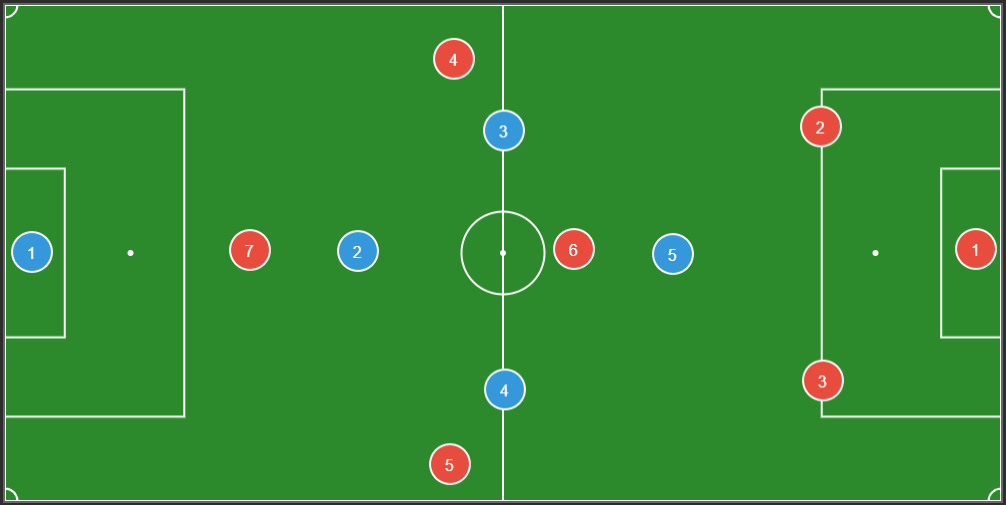
Expanding the Field: Transitioning from 5v5 to 7v7
Youth football often begins in a small-sided format where every touch counts and decision-making is immediate. In a 5v5 setup, players develop individual skills through constant involvement. Transitioning to a 7v7 format opens up the game by adding more players, enlarging the pitch, and evolving the tactical framework. This article explores how this shift enhances player roles, introduces structured formations, and deepens tactical understanding.
Introduction
Youth football often begins in a small-sided format where every touch counts and decision-making is immediate. In a 5v5 setup, players develop individual skills through constant involvement. Transitioning to a 7v7 format opens up the game by adding more players, enlarging the pitch, and evolving the tactical framework. This article explores how this shift enhances player roles, introduces structured formations, and deepens tactical understanding.
Understanding the Transition
In 5v5 games, the limited space means every player is highly engaged, emphasizing quick reactions, close control, and individual creativity. When moving to 7v7, players must adapt to increased spatial awareness and a more distributed style of play. Extra players create defined responsibilities and demand improved communication, easing the transition into more complex team organization.
Deep Dive into Common Formations
Coaches experimenting with 7v7 often use several formations that suit the increased complexity of play:
- The 2-2-2 Formation:
A balanced layout with two defenders, two midfielders, and two forwards. This formation maintains simplicity while introducing defined roles, encouraging both offensive and defensive contributions. - The 3-2-1 Formation:
With three defenders at the back, two midfielders linking play, and one forward leading the attack, this setup emphasizes a solid defensive structure—ideal for teams focusing on organization. - The 2-3-1 Formation:
Deploying three players in midfield enhances ball retention and creative build-up play, challenging players to operate fluidly in attack while maintaining a disciplined defense.
Tactical Benefits and Player Development
Transitioning to 7v7 teaches valuable lessons: – Spacing and Positioning: Players learn to exploit gaps in both attack and defense on a larger pitch. – Communication: With more players, effective dialogue on positioning and tactical adjustments becomes essential. – Role Specialization: More structured formations help players understand and embrace specific responsibilities within the team.
Coaching Strategies and Drills
Coaches can ease the transition by: – Using Progressive Drills: Start with modified 5v5 drills and gradually introduce extra players or wider spaces. – Rotational Positions: Encourage players to experience various roles during training to understand different tactical demands. – Video Analysis: Review match footage to illustrate how formations work and reinforce effective communication and positioning.
Player Perspectives and Real-Game Application
Players often report improved game awareness and clearer team dynamics when transitioning from 5v5 to 7v7. Real-game scenarios show that this progression refines technical skills while building mental resilience and tactical understanding.
Conclusion
The shift from 5v5 to 7v7 is a key developmental stage in youth football. By exploring formations such as the 2-2-2, 3-2-1, and 2-3-1, teams can develop a more organized, tactically aware style of play—laying the foundation for even more advanced stages of the game.
Coming Soon: Moving from 7v7 to 9v9 formations!